10 best consumer lending software platforms in 2026
Consumer lending software has to do two jobs exceptionally well: help lenders make sound credit decisions and help borrowers navigate the process without unnecessary friction.
Consumer credit is among the most heavily regulated forms of lending. It also has the most direct engagement with borrowers. Every application, approval, payment, disclosure, and collection interaction can affect both regulatory exposure and the borrower experience.
For banks and credit unions, the challenge is modernizing consumer lending while preserving core system integration, institutional controls, and member or customer trust. For consumer finance companies and fintechs, the challenge often involves launching new products, adapting credit strategies, and managing growing portfolios without rebuilding the technology stack every time the business changes.
The right software can help lenders address both sets of demands. The wrong fit can leave teams managing disconnected systems, manual workarounds, and compliance obligations that become harder to meet as portfolios grow.
This guide compares 10 consumer lending software platforms to consider in 2026, including their capabilities, strengths, and considerations for different lending organizations.
Key takeaways
- Compliance belongs at the center of your consumer lending software evaluation. Look beyond automated workflows to configurable controls, accurate calculations, auditability, and support for applicable consumer lending regulations.
- Origination and servicing are different buying decisions. Some platforms focus on application intake and underwriting, while others manage the account throughout its lifecycle. Many lenders need both.
- Product coverage varies across consumer loan management software. A platform built for personal loans may not offer the same depth for credit cards, lines of credit, auto lending, or point-of-sale financing.
- Core integration can shape an evaluation shortlist. Banks and credit unions should assess compatibility with existing systems, while fintechs may prioritize APIs, flexibility, and speed to launch.
- Borrower experience extends beyond the application. Payment options, account access, communications, and collections all influence how borrowers experience a lender.
What does consumer lending include?
Consumer lending covers a broad range of credit extended to individuals for personal, household, or family purposes. The category spans several products, each with different underwriting, servicing, payment, and compliance requirements. This includes:
- Personal and installment loans: Fixed or variable repayment schedules, often unsecured
- Lines of credit: Revolving access to credit, with ongoing balance and limit management
- Credit cards: Revolving credit, transaction-level activity, billing cycles, and complex payment allocation
- Point-of-sale financing: Credit offered during a purchase, often through merchant or embedded-finance channels
- Auto loans: Secured lending involving collateral, lien management, and vehicle-related workflows
- Small-dollar loans: Smaller balances, often with high-volume origination and servicing requirements
Not every consumer lending platform supports every product equally well. A vendor may offer strong consumer loan origination but require another system to manage consumer loan servicing, revolving accounts, or complex payment rules.
How banks and credit unions buy vs. how consumer finance companies buy
The same software can serve different purposes depending on a lender's operating model.
Banks and credit unions typically evaluate a consumer lending system within a broader institutional environment. Core integration, security, regulatory controls, existing vendor relationships, and the ability to support branch and digital channels can carry significant weight. They may also need to coordinate lending with deposit relationships and enterprise reporting.
Consumer finance companies and fintechs often place greater emphasis on product flexibility, configurable credit policies, APIs, servicing automation, and speed to market. Their systems may need to support multiple lending programs, funding partners, or borrower experiences without requiring a separate technology stack for each product.
Both groups need accurate account management, reliable compliance processes, and a borrower experience that works from application through repayment.
Consumer lending software at a glance
| Platform | Lifecycle focus | Platform approach | Best suited to |
|---|---|---|---|
| LoanPro | End-to-end | API-first, cloud-based lending infrastructure | Fintechs, banks, credit unions, and card or LOC issuers |
| MeridianLink | Origination | Cloud-based LOS with broad integrations | Community banks and credit unions |
| Finastra | End-to-end | Modular lending within a broader banking platform | Mid-size and large banks |
| Abrigo | Origination and portfolio risk | Lending and risk-management solutions | Community banks and credit unions |
| Baker Hill | Origination and decisioning | Configurable lending workflows | Community and regional banks |
| Jack Henry | End-to-end | Integrated banking technology ecosystem | Banks and credit unions using Jack Henry systems |
| nCino | End-to-end | Salesforce-based banking platform | Regional and enterprise banks |
| Nortridge | Servicing | Configurable loan management, cloud or on-premises | Consumer finance companies and servicers |
| LendFoundry | End-to-end | Modular, cloud-based lending platform | Digital lenders and fintechs |
| Vergent LMS | Origination and servicing | Loan management with storefront and online capabilities | Specialty and small-dollar lenders |
How we evaluated consumer loan software providers
For this list, we evaluated platforms based on their ability to support the regulatory, operational, and borrower-facing demands of consumer credit. Of course, we started with LoanPro for obvious reasons. More broadly, our evaluation considered five key areas:
- Compliance and risk management. How each platform supports consumer lending compliance through configurable workflows, accurate calculations, documentation, auditability, and risk-management capabilities. Relevant considerations included support for requirements associated with TILA and Regulation Z, ECOA, FCRA, MLA, SCRA, credit reporting, and collections.
- Product and lifecycle coverage. Which consumer lending products each platform supports and whether its capabilities extend across origination, servicing, payments, and collections. Platforms with broad capabilities were considered alongside specialized solutions with deeper functionality in particular lending categories.
- Technology and integration. How each platform is architected, including cloud capabilities, APIs, configurability, and integration with core banking systems and third-party services. These considerations are especially important for institutions modernizing existing infrastructure and lenders launching new products.
- Borrower experience. How platforms support digital applications, account access, payment experiences, and ongoing borrower interactions. A smooth experience throughout the loan lifecycle can help lenders reduce friction and strengthen customer relationships.
- Market and organizational fit. How relevant each platform is for different lenders, including banks and credit unions, consumer finance companies, fintechs, and specialty lenders.
The resulting list reflects a range of consumer lending platforms. It is intended to help lenders identify potential relevant options. Individual capabilities, integrations, and implementation requirements should be confirmed directly with each provider.
Top 10 best consumer lending platforms in 2026
The following platforms are presented as a shortlist of options to evaluate, not a universal ranking or a comprehensive list of solutions on the market. The best fit depends on the products you offer and the systems you need to connect.
1. LoanPro
LoanPro is a configurable, API-first lending and credit platform designed to manage consumer credit accounts across the full loan lifecycle. Its modern lending core supports a range of lending products, including installment loans, lines of credit, credit cards, and auto lending. It also supports newer ways to deliver credit like Loan on Card, which provides immediate access to funds via a mobile wallet.
Key strengths
- Flexible account structures for different lending products and repayment models.
- API-first architecture that supports integrations and custom borrower experiences.
- Account servicing, payment processing, automation, and portfolio management capabilities.
- Support for configurable workflows and business rules as lending programs evolve.
How to evaluate: Determine whether LoanPro's servicing and account management capabilities align with your product requirements, and assess how its APIs and integrations fit your existing origination, payment, and data infrastructure. Confirm the specific compliance workflows and reporting capabilities required for your portfolio.
Best fit for: Consumer finance companies, fintechs, and financial institutions seeking flexible lending infrastructure for multiple products, especially when end-to-end servicing capabilities and integration flexibility are priorities.
2. MeridianLink
MeridianLink Consumer is a cloud-based loan origination platform designed primarily for banks and credit unions. It supports digital applications, automated decisioning, configurable workflows, and integrations across the consumer lending process.
Key strengths
- Digital application experiences for personal loans, auto loans, HELOCs, and other consumer products.
- Configurable underwriting rules and automated decisioning.
- Borrower communications and workflow automation.
- Connections to core systems and third-party lending tools.
How to evaluate: Assess the platform's fit with your institution's origination workflows, core system, and existing technology partners. If you need extensive post-funding servicing, determine which capabilities are native and which require additional systems.
Best fit for: Banks and credit unions looking to modernize consumer loan origination, improve application processing, and connect lending workflows to existing institutional systems.
3. Finastra
Finastra offers lending technology for financial institutions, including consumer and commercial lending workflows. Its solutions can support the lending process from application and underwriting through documentation and closing.
Key strengths
- Broad lending capabilities for institutions with multiple loan portfolios.
- Document preparation and workflow automation through its lending solutions.
- Integration options across banking and lending systems.
- Support for institutions with complex operational and compliance requirements.
How to evaluate: Identify the specific Finastra products and modules required for your consumer lending use case. Assess implementation complexity, integration with your core, and whether the selected solution covers the servicing and reporting needs of your portfolio.
Best fit for: Banks and credit unions seeking lending technology within a broader banking software environment, particularly those with multiple lending lines and established enterprise systems.
4. Abrigo
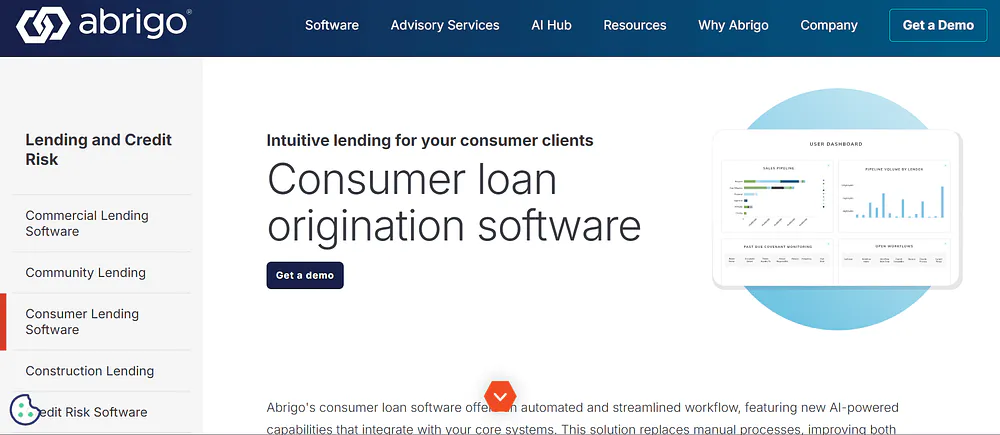
Abrigo provides lending and risk management technology for financial institutions, with a strong presence among community banks and credit unions. Its lending solutions help institutions manage application workflows and credit processes.
Key strengths
- Lending workflow support for financial institutions.
- Tools that connect lending operations with credit risk and portfolio management.
- Familiarity with the needs of community and regional institutions.
- Potential alignment with broader risk-management technology requirements.
How to evaluate: Confirm the consumer lending products and lifecycle stages supported by the specific Abrigo solution under consideration. Review core integrations, reporting, and how the platform fits alongside existing credit risk and compliance tools.
Best fit for: Community banks and credit unions looking to improve lending workflows while connecting lending operations with broader credit risk and portfolio oversight.
5. Baker Hill
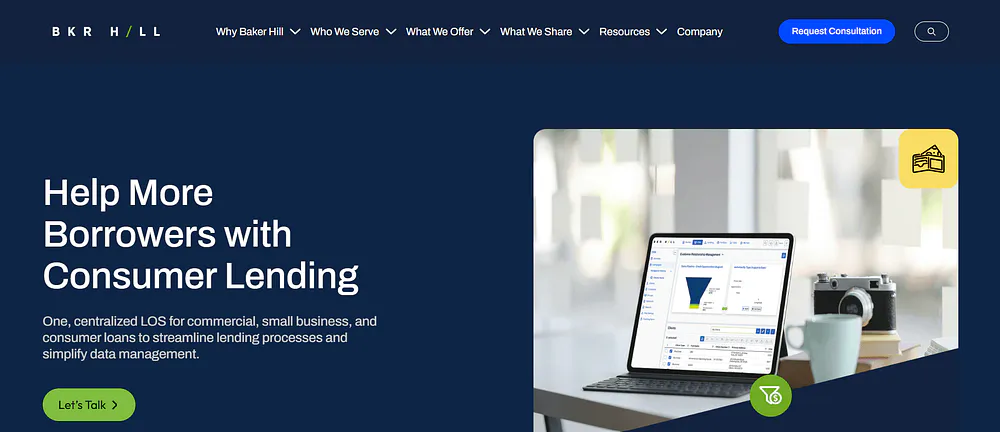
Baker Hill offers loan origination software for financial institutions, including consumer, commercial, and small-business lending. Its platform emphasizes centralized workflows and application management.
Key strengths
- A common origination environment across lending categories.
- Online borrower applications and banker-facing application workflows.
- Decision automation for eligible lending processes.
- Centralized data and workflow management.
How to evaluate: Examine consumer-specific functionality alongside the platform's broader lending capabilities. Confirm the supported consumer products, core integrations, and whether servicing is included or handled through another system.
Best fit for: Banks and credit unions seeking a unified origination platform across consumer and business lending, particularly those aiming to simplify application workflows and data management.
6. Jack Henry
Jack Henry provides technology for banks and credit unions, including lending solutions that can connect with its broader banking ecosystem. Its consumer lending offerings should be evaluated in the context of the institution's core and digital banking environment.
Key strengths
- Banking technology integration for institutions using Jack Henry systems.
- Lending workflows designed for financial institution operations.
- Potential alignment with existing digital banking and operational infrastructure.
- A broader technology ecosystem for institutions seeking vendor consolidation.
How to evaluate: Identify the specific Jack Henry lending product and consumer use case. Verify supported loan types, origination versus servicing coverage, integration requirements, and how the solution works with your institution's core configuration.
Best fit for: Banks and credit unions that prioritize compatibility with their existing Jack Henry technology environment and want to evaluate lending capabilities within that ecosystem.
7. nCino
nCino offers cloud-based banking software built on Salesforce, including consumer loan origination capabilities. Its platform supports digital application workflows, document preparation, and connections to third-party services.
Key strengths
- Consumer loan origination within a broader banking platform.
- Digital application experiences and multi-product application workflows.
- Document preparation and e-signature capabilities.
- Integration with banking and fintech partners.
How to evaluate: Assess how the Salesforce-based architecture fits your institution's technology strategy, administration model, and integration requirements. Confirm consumer product coverage and the systems needed to support post-origination servicing.
Best fit for: Banks and financial institutions pursuing a cloud-based banking platform and seeking to connect consumer lending with broader customer and operational workflows.
8. Nortridge
Nortridge offers loan management software designed to support lenders and servicers managing diverse loan portfolios. Its platform emphasizes configurable account management and servicing workflows.
Key strengths
- Loan servicing and portfolio management capabilities.
- Support for varied loan structures and repayment arrangements.
- Configurable workflows for account management and collections.
- Tools for managing loan data and operational reporting.
How to evaluate: Review how the platform handles your specific loan structures, payment rules, reporting obligations, and integrations. If you need digital origination, establish whether that functionality is included or supplied by a partner.
Best fit for: Consumer finance companies, specialty lenders, and servicers managing complex portfolios that require configurable loan management and servicing capabilities.
9. LendFoundry
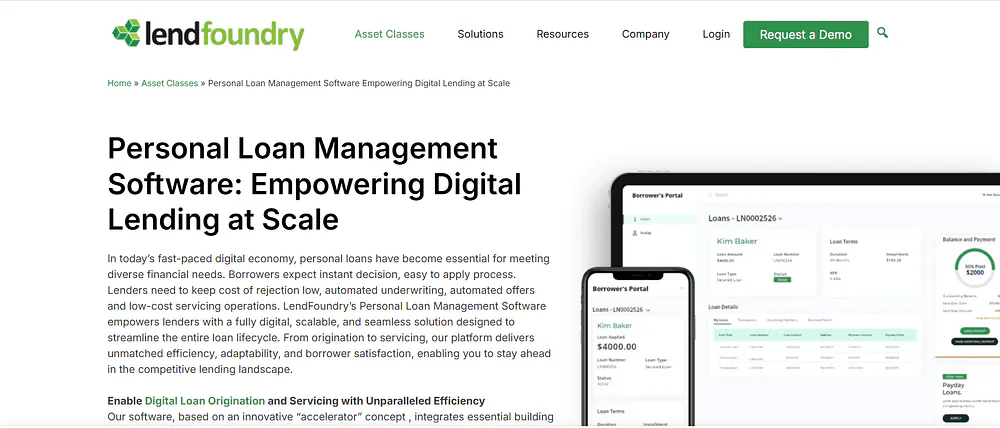
LendFoundry provides lending technology for digital lenders and fintechs, with a focus on configurable lending workflows and online lending operations.
Key strengths
- Digital lending workflows for online lending businesses.
- Configurable processes to support different lending programs.
- Technology intended to support lender operations and product development.
- Potential fit for organizations building digital-first lending experiences.
How to evaluate: Verify current product availability, supported consumer loan types, and the extent of native servicing functionality. Assess implementation resources, API capabilities, and the platform's fit with your compliance and reporting requirements.
Best fit for: Fintechs and digital lenders evaluating configurable technology for consumer loan origination and lending operations.
10. Vergent LMS
Vergent LMS provides loan management software for consumer finance companies and specialty lenders. Its platform focuses on managing lending operations and servicing accounts across consumer credit programs.
Key strengths
- Loan management capabilities for consumer finance operations.
- Support for configurable lending workflows.
- Account servicing and portfolio administration.
- Potential fit for specialty lending business models.
How to evaluate: Confirm support for your specific products, jurisdictions, payment structures, and servicing requirements. Review integrations, implementation needs, and the platform's ability to support growth across lending programs.
Best fit for: Consumer finance companies and specialty lenders seeking loan management technology aligned with their operational and portfolio requirements.
Conclusion
Consumer lending software is a long-term operating decision with consequences for compliance, borrower experience, and the economics of the portfolio.
The best platform is the one that supports your specific credit products, helps your teams manage regulatory obligations, integrates with the systems you depend on, and gives borrowers a reliable experience throughout the life of the account.
Have questions? Checkout our FAQ:
What is consumer lending software?
Consumer lending software helps lenders manage credit offered to individuals, including personal loans, auto loans, credit cards, lines of credit, and point-of-sale financing. Depending on the platform, it may support origination, underwriting, servicing, payments, collections, and reporting.
What is the difference between loan origination software and loan management software?
Loan origination software (LOS) manages the process of acquiring and approving a loan, from application through underwriting and funding. Loan management software (LMS) manages the account after origination, including payment schedules, balances, servicing, and collections. Some platforms support both.
What should banks and credit unions prioritize when choosing consumer lending software?
Banks and credit unions should assess regulatory controls, core integration, borrower experience, product coverage, security, and compatibility with existing workflows. Institutions should also determine whether the platform supports the specific consumer loan products they offer.
What should fintechs and consumer finance companies prioritize?
Fintechs and consumer finance companies should evaluate product flexibility, API capabilities, servicing automation, configurable credit policies, integration options, and implementation requirements. These capabilities can be especially important when launching new products or managing multiple lending programs.
Does consumer lending software ensure regulatory compliance?
No. Software can support compliance through configurable rules, disclosures, calculations, audit trails, and reporting, but lenders remain responsible for their compliance programs, implementation, oversight, and applicable legal requirements.
Can one platform support multiple consumer lending products?
Some platforms support multiple consumer products, but capabilities vary. Lenders should verify that the system can manage the specific account structures, payment rules, disclosures, and servicing workflows required for each product.