10 best loan servicing software in 2026
Servicing is the part of the lending lifecycle that most software comparisons tend to ignore.
Origination may win the customer but servicing determines whether lenders retain them and drive profitably over the life of the loan. After a loan is originated, what happens after is what separates lenders that build loyal, profitable portfolios from those that quietly lose borrowers to frustration, manual processes, and inconsistent experiences.
That’s why our latest list focuses on the top loan servicing platforms for the U.S. market. In this guide, we look across 10 different solutions for servicing, evaluating each based on its servicing capabilities, U.S. market relevance, payment processing depth, compliance and audit tooling, and who the platform serves.
While we start with LoanPro at No. 1 because we’re writing this list, there is no single “best” servicing platform that works in every case. A community bank replacing a legacy servicing stack has different needs than a fintech launching embedded credit or a large institution managing complex portfolios.
Based on insights from customer reviews, vendor sites, and publicly available information, the 10 platforms we evaluate include: LoanPro, Nortridge, Peach, TurnKey, Canopy, Shaw, Fiserv, FIS, The Mortgage Office, and Bryt.
Top 10 best loan servicing platforms in 2026
1. LoanPro
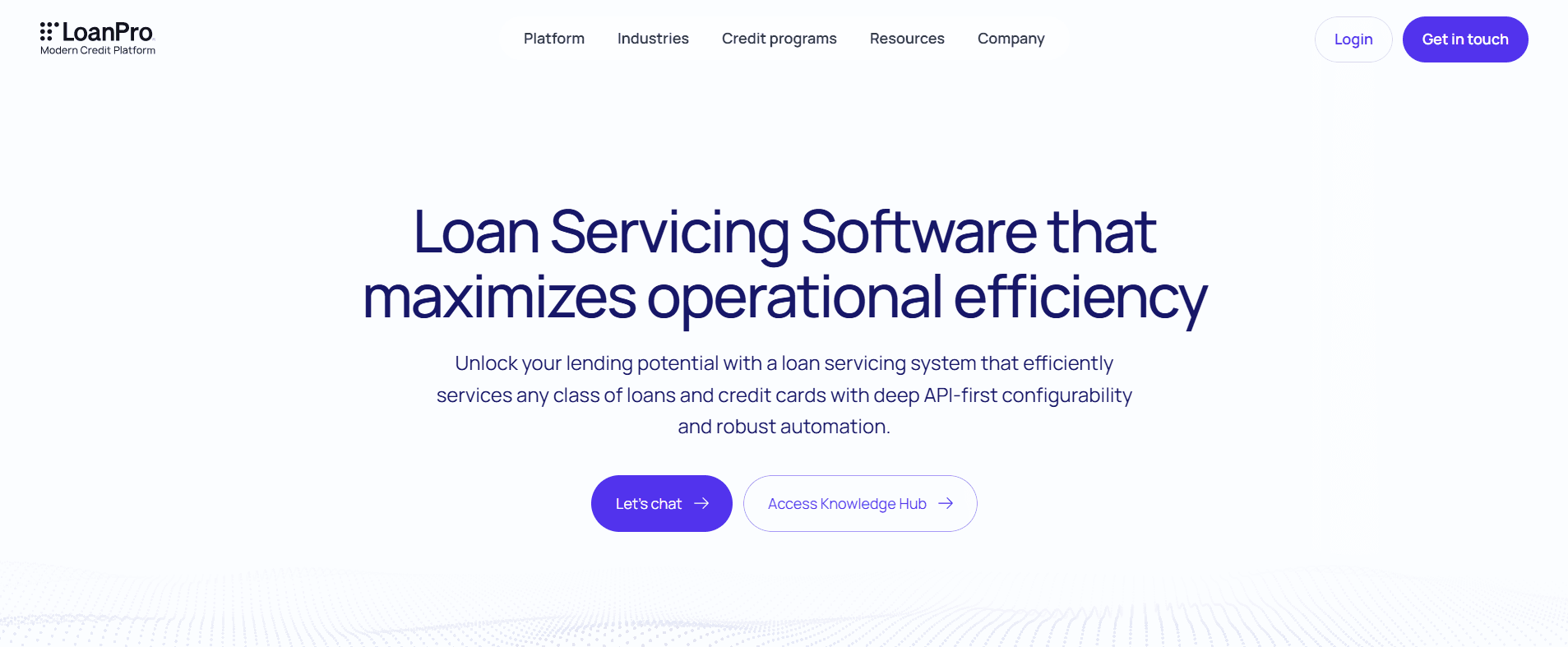
LoanPro is built for lenders that see servicing as a core capability within a broader modern credit platform. LoanPro’s servicing software is designed around configurable servicing logic, allowing lenders to tailor repayment structures, automate servicing workflows, and embed loan servicing directly into broader digital ecosystems.
Key strengths:
- Highly configurable servicing workflows and loan logic
- Strong API-first architecture for embedded and composable lending stacks
- Advanced payment orchestration and automation capabilities
- Designed for complex, multi-product portfolios
- Integrated Model Context Protocol (MCP) to enable automated AI workflows
What to consider:
- Requires upfront configuration and operational design work
- Best fit for teams comfortable with API-driven infrastructure
- May be more platform than “out-of-the-box” system for smaller lenders
- Implementation benefits from clear internal servicing strategy
2. Nortridge
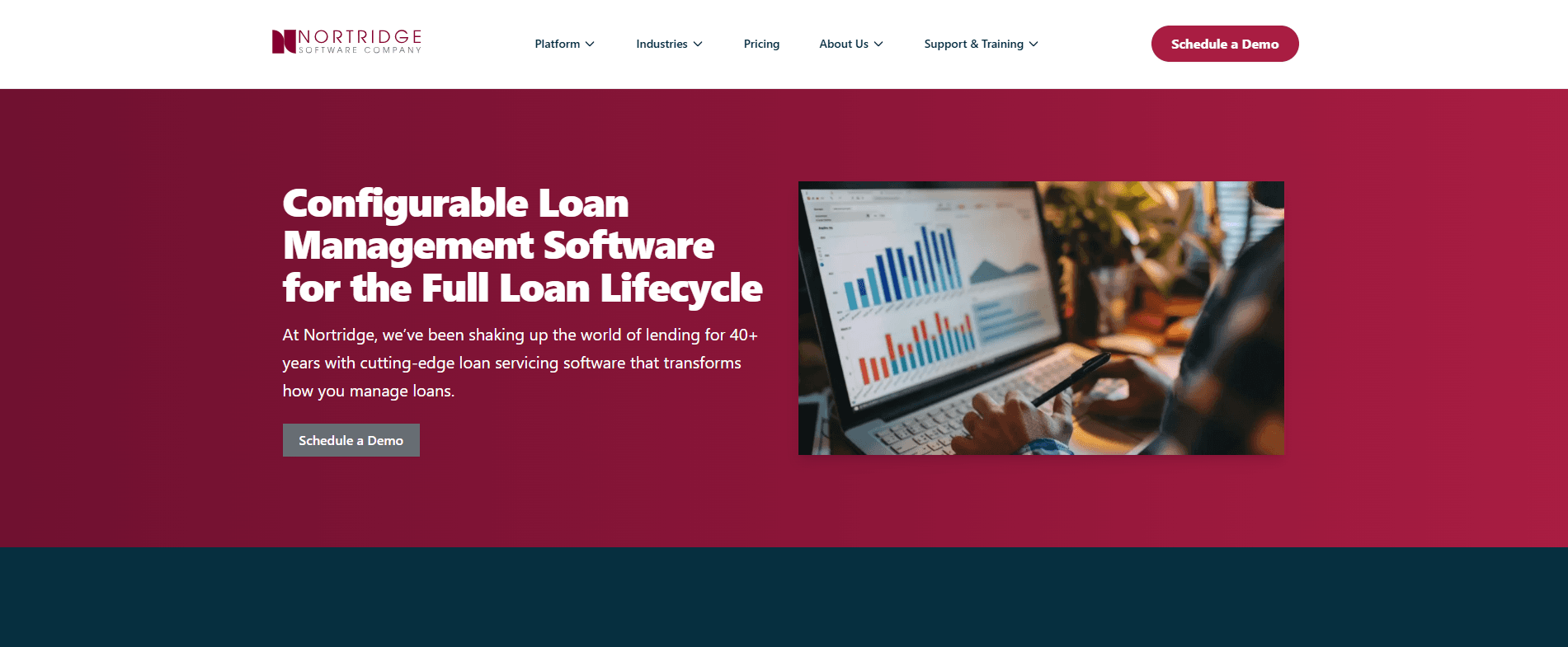
Nortridge is a long-standing servicing platform used across consumer lending, specialty finance, and equipment finance. It provides a broad set of servicing and portfolio management tools, with configurable workflows and strong reporting capabilities. It is often selected by institutions looking for a stable, established system without moving into fully custom infrastructure.
Key strengths:
- Mature servicing and portfolio management capabilities
- Strong reporting and operational visibility tools
- Flexible configuration for diverse loan types
- Proven track record across specialty lending segments
What to consider:
- Frequent customer mentions of slow support responses and long cycles to fix bugs
- Customization can be complex and often requires deeper system expertise
- Less modern API-first architecture compared to newer platforms
- Integration flexibility can be more limited in complex stacks
- UI/UX may feel legacy in highly digital environments
3. Peach Finance

Peach Finance focuses on API-first loan management and servicing with an emphasis on borrower experience and digital-first engagement. The platform supports loan servicing, payments, and borrower communications with a design philosophy aligned to fintech and embedded finance use cases. It is commonly used by lenders seeking to modernize servicing interactions and reduce friction in repayment experiences.
Key strengths:
- Strong borrower-facing servicing experience
- API-first architecture designed for fintech integration patterns
- Flexible payment and communication workflows
- Well suited for embedded consumer lending use cases
What to consider:
- Less proven in large, complex institutional environments
- May require integration for broader banking ecosystems
- Feature depth varies depending on portfolio complexity
- Best fit is narrow compared to enterprise servicing platforms
- Long-term roadmap and support continuity may be uncertain following a recent acquisition
4. TurnKey Lender
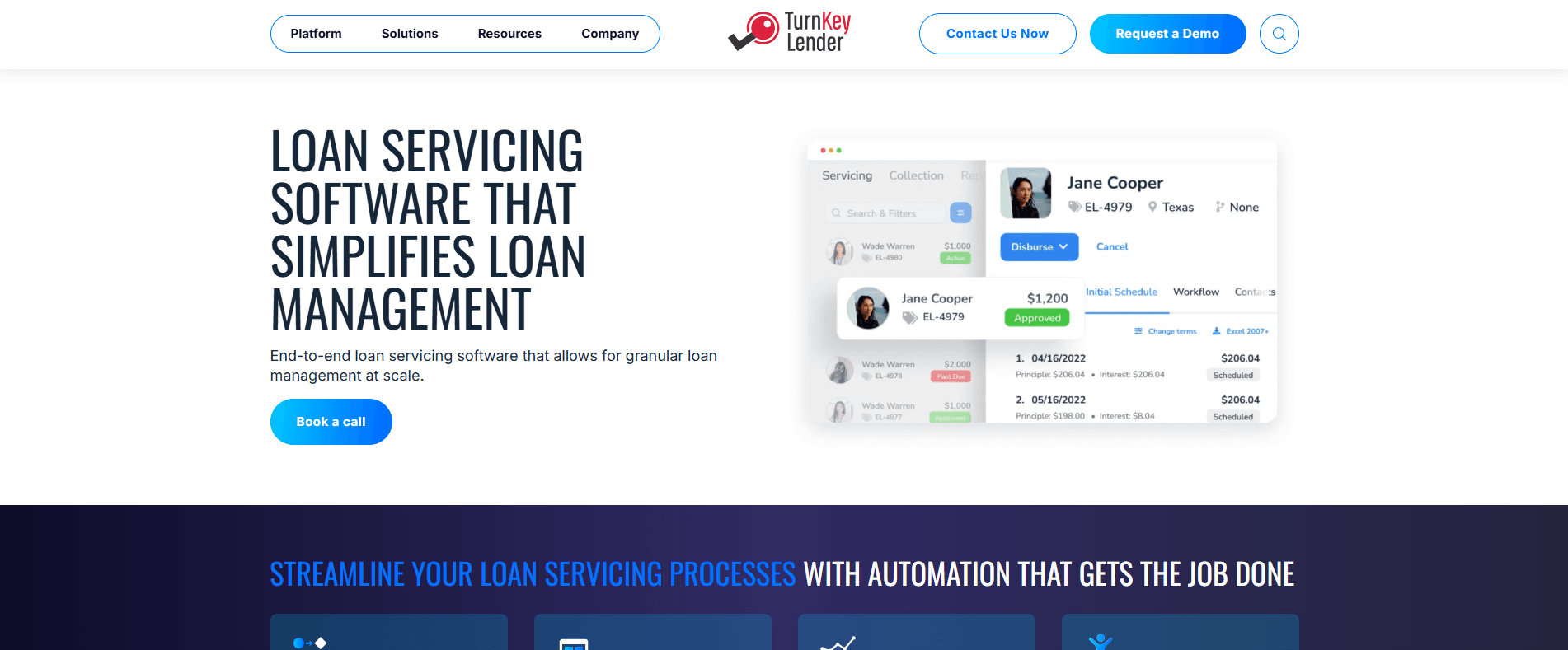
TurnKey Lender provides an end-to-end lending platform that includes origination, underwriting, decisioning, and servicing. This makes it attractive for lenders who want to consolidate vendors or launch lending programs quickly without assembling multiple systems.
Key strengths:
- Workflow integration across the lending lifecycle
- Unified origination and servicing platform
- Fast deployment for new lending programs
- Suitable for end-to-end digital lending workflows
What to consider:
- Servicing depth may be lighter than dedicated platforms
- Less flexibility for complex servicing customization
- Potential limitations for large-scale institutional portfolios
- Vendor lock-in risk across full lending stack
- Primary support teams operate in European and Asian time zones
5. Canopy
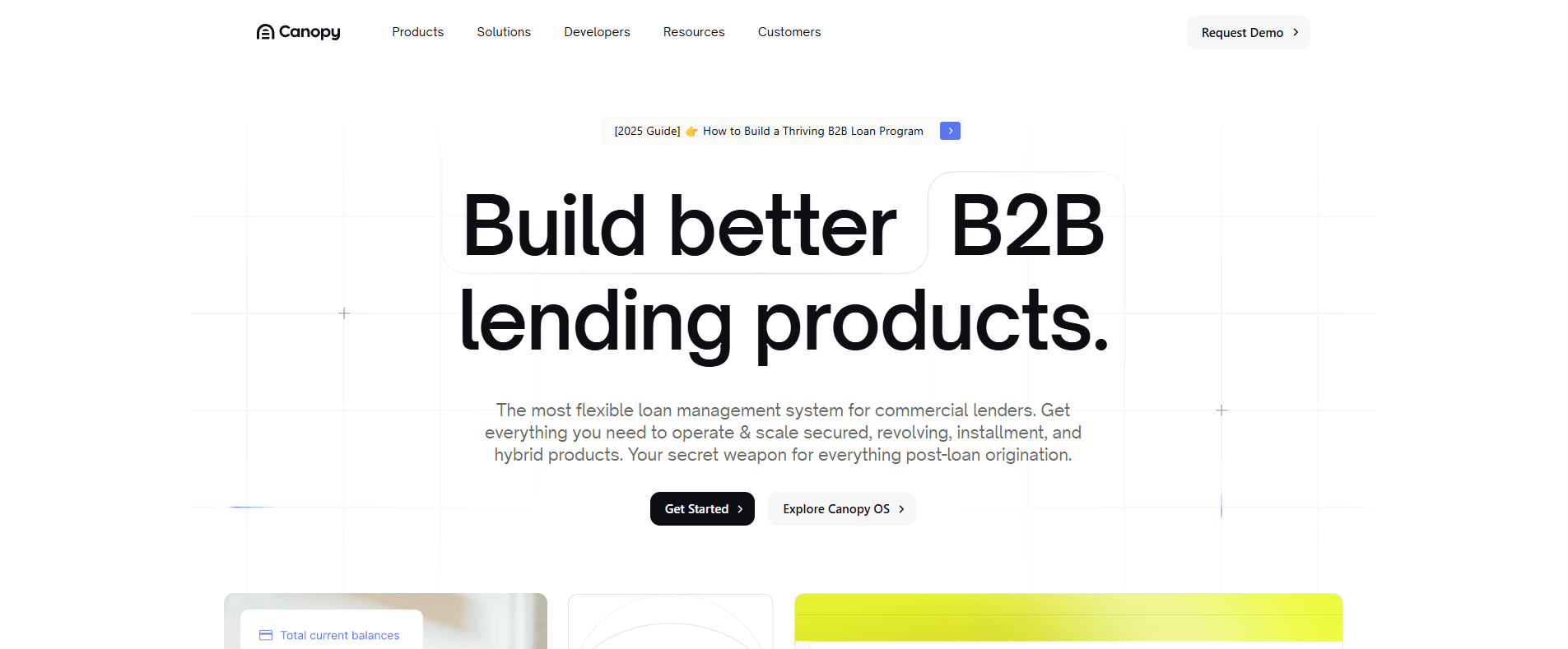
Canopy is positioned around servicing operations, with a strong emphasis on collections, repayment workflows, and borrower engagement. It is designed to help servicing teams reduce manual work and improve consistency in delinquency management and payment recovery processes. The platform is often used by lenders looking to strengthen operational discipline in servicing.
Key strengths:
- Strong focus on collections and servicing workflows
- Automation of repayment and delinquency processes
- Borrower communication and engagement tools
- Operational efficiency for servicing teams
What to consider:
- Exclusively focused on B2B/commercial lending
- Less emphasis on broad ecosystem integration
- May not support highly complex product structures
- Depth of customization varies by use case
- Stronger in operations than platform extensibility
6. Shaw Systems
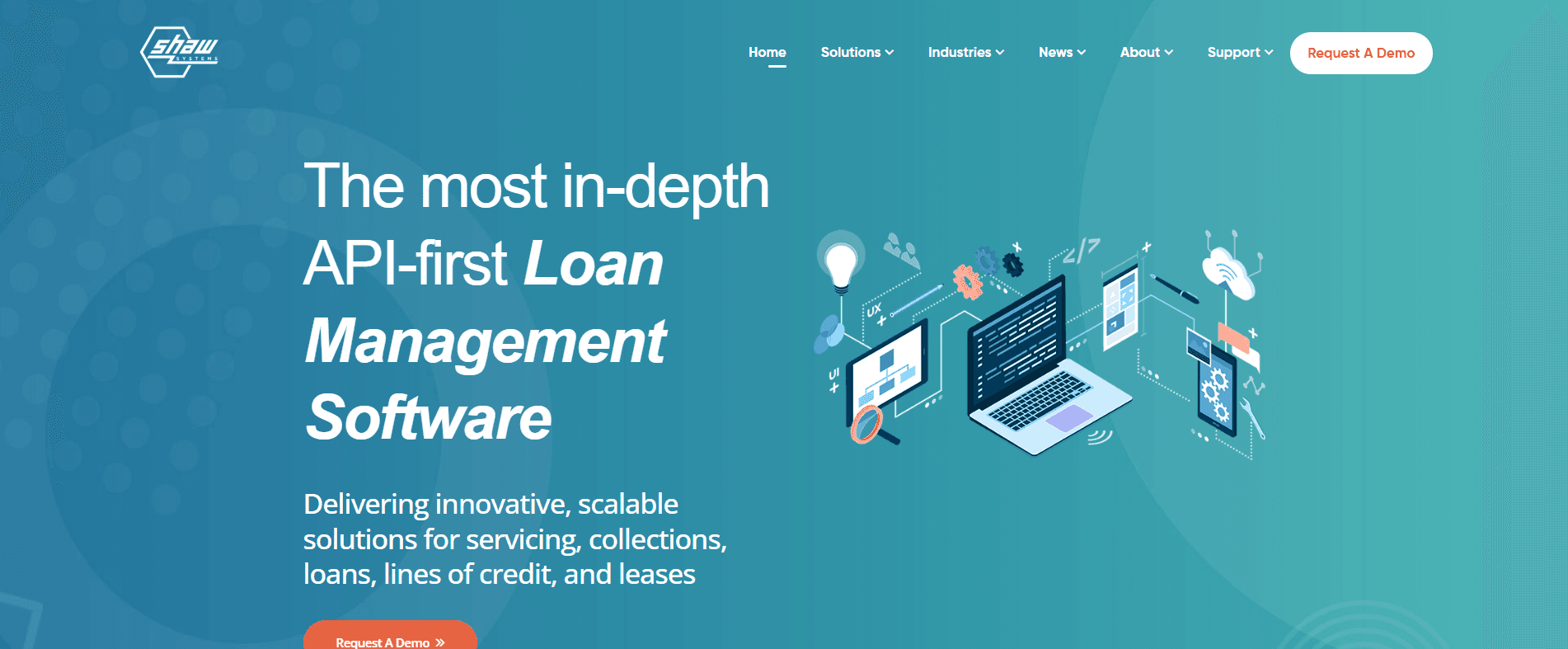
Shaw Systems is a long-standing servicing provider commonly used by banks and credit unions that need stability, regulatory alignment, and deep servicing functionality. It is particularly relevant for institutions operating legacy portfolios that require structured migration paths rather than greenfield system design. The platform is known for supporting a wide range of lending products with strong operational controls.
Key strengths:
- Specialized focus on retail/commercial loan, lease, and collections management
- Deep servicing functionality for regulated financial institutions
- Strong support for legacy portfolio structures and migrations
- Established presence in bank and credit union markets
- Reliable compliance and reporting capabilities
What to consider:
- Legacy architecture can limit modernization speed
- Less flexible for embedded or API-first lending models
- UI/UX may feel dated compared to newer platforms
- Customization often depends on vendor-led configuration cycles
7. Fiserv
Fiserv offers broad financial services infrastructure, including loan servicing capabilities embedded within its wider banking and payments ecosystem. It is often selected by large institutions that prioritize vendor consolidation and integrated core banking functionality over standalone servicing specialization.
Key strengths:
- Deep integration with core banking and payments systems
- Enterprise-scale infrastructure for large financial institutions
- Broad ecosystem of financial services products
- Strong regulatory and compliance frameworks
- Established U.S. presence across banks and credit unions
What to consider:
- Less flexible for highly customized servicing workflows
- Complex implementation and change management cycles
- Can require significant vendor dependency
- Innovation cycles may be slower than fintech-native platforms
8. FIS
FIS provides enterprise-grade financial technology across banking, capital markets, and lending. Its servicing capabilities are typically part of a larger institutional stack, making it suitable for organizations that require deeply integrated financial infrastructure at scale. It is commonly used in environments where servicing must align tightly with core systems and enterprise risk frameworks.
Key strengths:
- Enterprise-scale lending and financial infrastructure
- Strong integration with core banking and capital markets systems
- Highly robust compliance and risk management capabilities
- Global footprint supporting large institutions
What to consider:
- Less agility for product innovation and rapid iteration
- Complex deployment and operational overhead
- Customization often requires enterprise implementation cycles
- Not optimized for fintech-style embedded lending models
- Some customer reviews call out occasional issues with data accuracy and reporting
9. The Mortgage Office
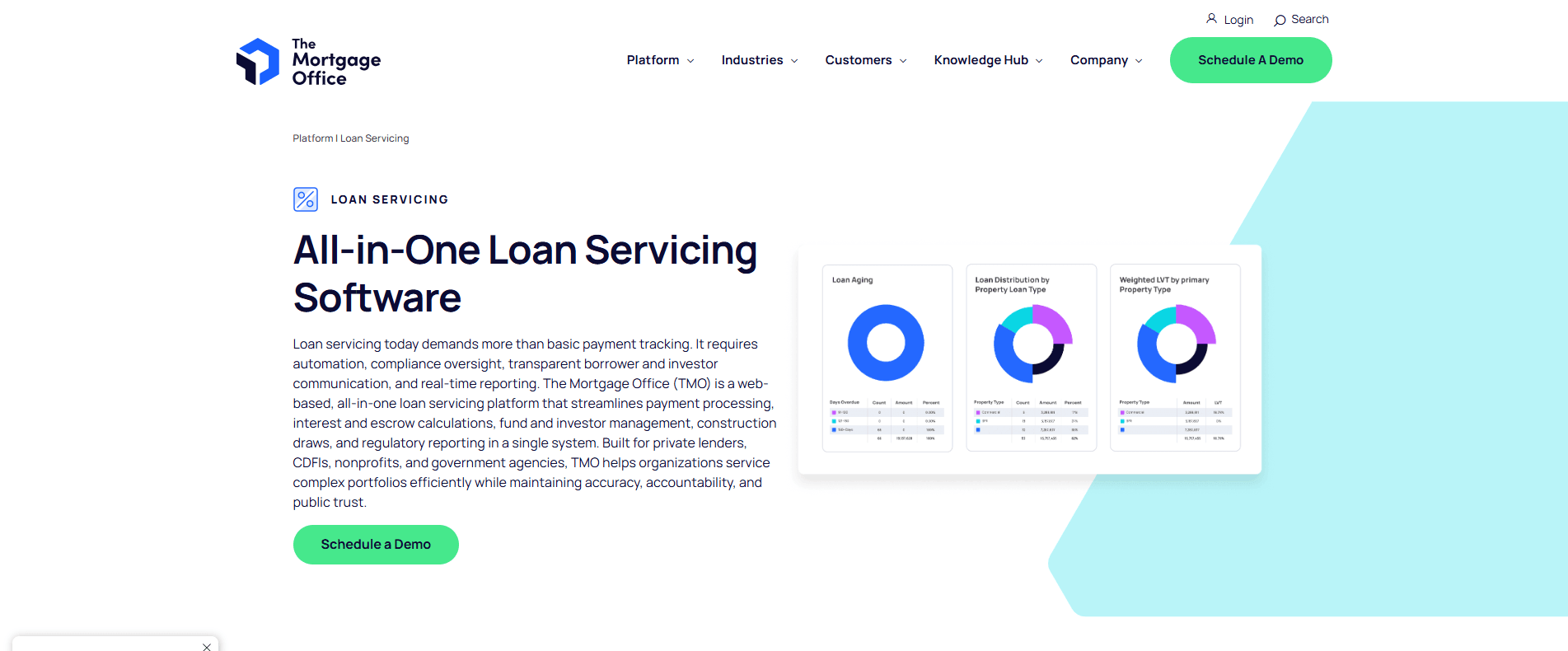
The Mortgage Office is widely used in mortgage servicing and private lending environments where loan structures, investor reporting, and payment schedules require specialized support. It is particularly strong in real estate-secured lending, making it a common choice for lenders operating outside traditional consumer or commercial banking frameworks.
Key strengths:
- Strong mortgage and real estate lending servicing capabilities
- Flexible payment schedules and loan structuring tools
- Robust investor and trust accounting support
- Established presence in private lending markets
What to consider:
- Narrower focus compared to general-purpose servicing platforms
- Less suited for embedded or fintech lending use cases
- Integration flexibility varies by deployment
- Considered a premium product by some that can be expensive for smaller portfolios
10. Bryt

Bryt Software serves specialty lending markets with a focus on configurable loan servicing and portfolio management. It is often used by lenders managing niche credit products that require tailored servicing workflows and reporting structures.
Key strengths:
- Offers budget-friendly, modular pricing
- Strong portfolio management and reporting tools
- Flexible loan structuring capabilities
- Suitable for niche and non-traditional lending programs
What to consider:
- Smaller ecosystem compared to enterprise vendors
- Integration depth may be limited for complex tech stacks
- Less suited for large-scale banking environments
- UI and workflows vary by configuration depth
Servicing as a retention and revenue tool
A servicing platform should not be evaluated solely on whether it can manage loans. Each of the platforms above varies in architecture, flexibility, and institutional fit. Instead, the better question is whether it helps improve the economics of the portfolio: borrower retention, portfolio performance, operational efficiency, and long-term profitability.
The right loan servicing platform reduces friction, supports borrower engagement, strengthens repayment performance, and helps servicing teams scale without adding unnecessary operational complexity.
This matters because modern servicing is where retention is won or lost. It determines whether borrowers stay current, refinance, expand relationships, or disengage entirely. Small differences in payment flexibility, communication timing, or delinquency handling compound into meaningful portfolio outcomes over time.
Servicing also has a direct revenue impact. Flexible payment orchestration reduces late-stage delinquency losses. Better borrower experiences increase lifetime value. Automated servicing workflows reduce operational overhead and allow teams to scale without proportional headcount growth.
In other words, servicing is now a performance lever, not just a loan management process. As you evaluate the right fit for your organization, understanding how loan servicing can improve retention and revenue is key.
How to evaluate loan servicing software
Most vendors can process payments, generate statements, and manage borrower accounts. For lenders evaluating or replacing a servicing platform, the bigger question is whether the platform can support how your institution operates today — and how it plans to evolve over the next five to ten years. Here are 5 key areas for lenders to consider and watch out for in their evaluation process:
1. Flexibility
A platform that works for today’s portfolio but cannot support future complexity often becomes tomorrow’s replacement project. Decision-makers should assess whether servicing logic, repayment structures, and workflows can adapt without requiring extensive vendor intervention every time the business changes.
2. Payment orchestration
Borrowers increasingly expect flexible repayment options, whether that means autopay, cards, ACH, retries after failed payments, or personalized payment arrangements. Servicing platforms that treat payments as a rigid back-office process can create friction that ultimately impacts delinquency, retention, and borrower satisfaction.
3. Integration capabilities
Loan servicing doesn’t exist in isolation. It increasingly sits inside a broader ecosystem of digital banking platforms, CRMs, payment providers, fraud tools, and borrower communication systems. Understanding how a platform supports APIs, data access, and embedded workflows is often just as important as evaluating native features.
4. Operational control
Lenders should evaluate how delinquency workflows are managed, how easily servicing rules can be modified, and how transparent payment and servicing actions are for audit and compliance purposes. If basic changes require lengthy vendor queues or custom development projects, operational agility tends to suffer.
5. Ongoing maintenance
It’s also important to understand what friction may emerge after implementation. Platforms that rely heavily on professional services for routine configuration changes, limit access to core servicing functionality, or require separate reporting tools to surface basic portfolio insights can create hidden operational costs over time.
Ultimately, the best servicing platform is the one that gives your institution the flexibility, visibility, and control to adapt as lending strategies, borrower expectations, and operational demands continue to change.
The future of servicing
The platforms in this list represent where loan servicing stands today — a mix of modern API-first systems, legacy enterprise infrastructure, and niche servicing tools built for specific lending segments. But, servicing is moving quickly toward something fundamentally different.
The next generation of servicing platforms will go beyond executing rules to managing outcomes. AI-driven systems can proactively adjust repayment strategies, resolve borrower issues before delinquency occurs, and orchestrate servicing actions across systems in real time.
Instead of static workflows, the future is agentic systems that can interpret context, execute decisions, and coordinate actions across payments, compliance, and borrower communication layers.
Frequently asked questions
What is loan servicing software?
Loan servicing software manages the lifecycle of a loan after origination, including payments, interest calculations, escrow, delinquency management, borrower communication, and compliance reporting.
Who uses loan servicing platforms?
Banks, credit unions, fintech lenders, mortgage companies, and specialty finance organizations use servicing platforms to manage active loan portfolios.
What is the difference between loan origination and servicing software?
Origination software handles application, underwriting, and funding. Servicing software manages the loan after it is funded, including payments and ongoing account management.
What should I look for in a loan servicing platform?
Key considerations include payment flexibility, configurability, API maturity, compliance support, reporting capabilities, and integration with your broader lending stack.