Buy Now, Pay Later for businesses: Should you build your own program?
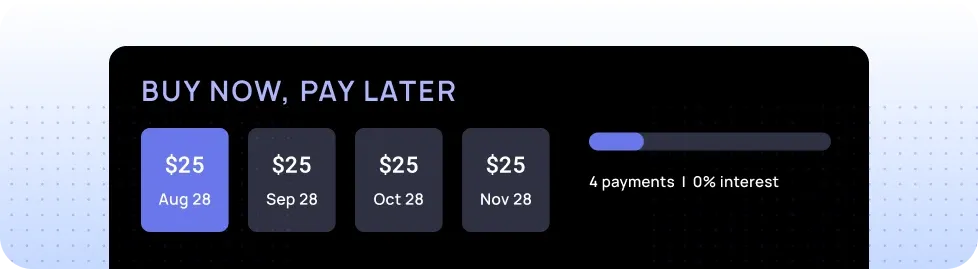
A Buy Now, Pay Later button during the checkout process looks deceptively simple.
A customer clicks the option to pay over time, gets approved, and completes the purchase. But behind that button is an entire lending operation.
Someone has to decide whether the customer qualifies. Someone has to originate the loan, fund the purchase, manage payments, service the account, handle disputes, and meet the applicable compliance requirements.
Today, many businesses choose a third-party BNPL provider that manages the majority of this process from presenting BNPL options at checkout, determining eligibility, approving purchases, and managing payments.
Businesses can also choose to own the financing program themselves, giving them more control over how BNPL fits into their customer experience and broader lending strategy.
In this guide, we’ll explore these two ways to offer BNPL for businesses, why an organization would choose to build its own platform, and what building a BNPL solution actually takes.
Key takeaways
- Businesses can offer BNPL to commercial customers through a third-party provider or by building their own BNPL platform.
- Building and owning a BNPL program gives businesses greater control over underwriting, financing products, customer relationships, and program economics.
- A business does not necessarily need to build every component from scratch. Modular lending infrastructure can provide the core capabilities needed to launch and manage a BNPL program.
- For businesses where financing is becoming an important part of the sales and customer experience, owning BNPL can turn financing from a payment feature into a strategic capability.
For business buyers
What businesses should know about using BNPL for purchases
If you're a business looking to use BNPL to make purchases, this section is for you. If you're a platform or lender exploring how to offer BNPL, skip ahead.
Buy Now, Pay Later solutions for businesses gives companies a way to purchase goods or services and repay the purchase over time rather than paying the full amount upfront.
The experience is similar to BNPL options for consumers: the business selects a financing option, provides information for the credit decision, receives terms, and repays the purchase according to the agreed schedule.
For the business making the purchase, the important question is generally how the financing works, what it costs, and whether the terms fit its cash flow. That's where the choice between a third-party BNPL provider and an owned BNPL program comes in.
For businesses offering BNPL
What is BNPL for businesses?
BNPL for businesses is a form of financing that allows a business customer to purchase goods or services and repay the amount over time.
Unlike consumer BNPL, which is typically associated with smaller retail purchases, B2B BNPL can support larger, more complex transactions tied directly to a company's operations and cash flow. Common B2B BNPL use cases include:
- Equipment and machinery: A contractor, restaurant, manufacturer, or other business can finance equipment needed to operate or expand.
- Inventory and supplies: A retailer, distributor, or other business can finance inventory purchases and repay over time rather than tying up working capital in a large upfront payment.
- Technology and software: A business can finance software licenses, hardware, implementation, or other technology investments, particularly when the purchase involves a significant upfront cost.
- Professional services: Businesses can finance services such as consulting, marketing, training, or other high-value engagements.
- Healthcare equipment and services: A medical practice, dental office, clinic, or other healthcare business can use BNPL for healthcare services to finance equipment, technology, supplies, or services purchased from another business.
Across these use cases, financing can help business customers manage cash flow, make larger purchases, and invest in their operations without paying the full amount upfront. That creates an important question for the business offering the financing: who owns the financing relationship behind the transaction?
Two ways to offer BNPL: Renting the button vs. owning the platform
Businesses generally have two paths for offering BNPL to their commercial customers: integrating with a third-party BNPL solution or building their own BNPL program. Let’s look at some of the key differences at a high level:
| Third-party BNPL provider | Owned BNPL platform | |
|---|---|---|
| Customer experience | Provider-support | Company-controlled |
| Customer relationship | Shared with or primarily managed by provider | Company-owned |
| Underwriting | Provider-defined | Company-defined or configured |
| Financing options | Based on provider’s available products and terms | Company-defined |
| Funding | Provider-managed | Company-managed |
| Loan servicing | Provider-managed | Company-managed |
| Product flexibility | More limited based on provider options | Greater flexibility |
Each model offers different benefits. For those exploring how to offer Buy Now, Pay Later for business, the decision to build vs. buy will often come down to how much control and ownership the company wants and whether it is prepared to take on the responsibilities of operating a lending program.
The checkout-integration path
BNPL providers such as Affirm, Klarna, and Afterpay integrate a BNPL checkout option into an existing customer experience. The business gets the benefit of offering BNPL without having to operate all of the infrastructure behind it, but it also gives up some control over how the financing product works.
The third-party provider typically determines the underwriting approach, financing terms, and much of the ongoing financing experience. For companies that simply want to add a financing option, this approach may make sense. For companies where financing has become a meaningful part of the customer relationship, the equation can look different.
Building your own BNPL program
Building your own BNPL for business buyers means making financing part of your company's own product and customer experience.
An owned program keeps the financing experience within the company's own products, systems, and customer workflows. The company can determine how the program is structured and how it connects to the underlying purchase.
Owning the program also creates more responsibility. The company needs the infrastructure to support credit decisioning, origination, funding, servicing, payments, account management, reporting, and applicable compliance requirements.
But, owning the program does not necessarily mean building every piece of the technology yourself. A modular lending platform like LoanPro can provide the core infrastructure while the business controls the customer-facing experience and the design of its financing program.
Why companies choose to own a BNPL program instead of rent it
The strongest reason to consider owning BNPL is simple: financing can become part of the product a business sells.
For some companies, BNPL is primarily a way to remove friction from checkout. In that case, outsourcing the financing operation can be an efficient way to add the capability. When financing becomes a meaningful part of the company's sales strategy, customer relationships, or broader lending operation, building a BNPL platform may make more sense.
- Capture more of the program economics: A third-party provider earns revenue for providing the financing capability. An owned program gives the business more control over how the economics of financing are structured.
- Extend the customer relationship: A financed purchase doesn’t end when the customer completes checkout. The customer may make payments for months or years, depending on the financing terms. That creates an ongoing relationship around the loan. Financing can become another way to engage with customers, understand their needs, and support future purchases.
- Create financing products that fit the business: A generic BNPL product may not fit every B2B transaction. Owning the program gives businesses more flexibility to design financing around their customers, products, transaction sizes, and sales models.
- Align underwriting with your business: Third-party providers generally apply their own credit policies and risk models. An owned program gives businesses greater control over how they evaluate customers and more flexibility to incorporate information such as transaction history, purchase patterns, customer tenure, business financial information, and other available data into their financing strategy, subject to applicable requirements.
- Make BNPL part of a broader lending strategy: For lenders, financial platforms, and companies already offering credit products, BNPL can become another financing product within a broader lending portfolio.
The benefits of offering BNPL for businesses come with a bigger operational responsibility: someone has to run the lending program behind the button.
What building your own BNPL program actually requires
The technology behind an owned BNPL program needs to support the full lending lifecycle, from the initial credit decision through repayment and account management.
Credit decisioning and underwriting
The program needs to determine whether a business customer qualifies for financing and, depending on the product, what terms it should receive.
B2B underwriting can incorporate factors such as business credit, financial information, transaction size, time in business, industry, existing customer relationships, and other available data.
The system also needs to apply the company's credit policies consistently and return decisions quickly enough to support the purchasing experience.
Loan origination
Once a customer is approved, the program needs to create the BNPL loan and establish its terms. That can include the principal amount, interest or fees, payment schedule, applicable disclosures, documentation, and other account details.
The financing also needs to connect cleanly to the underlying purchase so the business and buyer have a consistent view of the transaction.
Funding
Approved transactions need to be funded. Depending on the program structure, the business may fund loans itself, work with a bank or other financial institution, or use another funding arrangement.
The technology needs to support the movement and reconciliation of funds while maintaining an accurate record of each loan.
Loan servicing
Once the purchase is complete, the loan still needs to be managed. Servicing includes tracking balances and payment schedules, processing payments, handling adjustments, managing delinquency, communicating with borrowers, and maintaining an accurate account history.
Payments and account management
The program needs to support scheduled payments as well as the exceptions that inevitably occur: failed payments, refunds, adjustments, early payoff, account changes, and other servicing events.
For B2B customers, account management can also become more complex when businesses have multiple authorized users, multiple purchases, or multiple financed transactions.
Compliance and reporting
Lending programs carry regulatory and reporting requirements that vary based on the structure of the product, the borrower, and the applicable laws and regulations.
Depending on the program, those requirements can include disclosures, notices, dispute handling, recordkeeping, reporting, and other obligations.
Businesses considering an owned BNPL program should involve legal and compliance professionals early in the design process. Compliance needs to be part of the lending architecture rather than something added after the product is built.
Build vs. partner: choosing how to launch your own B2B BNPL program
Choosing to own a BNPL program does not mean building an entire lending technology stack internally. Businesses can partner with specialized providers to supply the infrastructure behind their financing program while maintaining control over the customer experience, financing products, and overall strategy.
White-label lending infrastructure can support core capabilities such as loan origination, servicing, payments, account management, and reporting while allowing the business to deliver the experience under its own brand. This gives the business control over the financing experience without requiring it to develop every lending capability internally.
A modern API-first lending platform like LoanPro can provide that white-label infrastructure, giving businesses the technology needed to operate their own BNPL program while keeping the financing experience and customer relationship in their hands.
Make financing part of the product you own
For businesses selling to other businesses, the decision to own BNPL comes down to what role financing plays in the business.
If BNPL is primarily a way to offer customers more payment flexibility, a third-party provider may be the simplest path. If financing is becoming part of the sales strategy, customer relationship, or broader lending business, owning the program creates more room to shape the product and economics around the business.
The button may be the part customers see. The lending program behind it is where the real business opportunity lives.
Ready to build your own BNPL program?
You don't have to build the lending infrastructure from scratch. Talk to LoanPro about how modular, white-label lending infrastructure can help you launch and manage a BNPL program built around your business and your customers.
Frequently asked questions (FAQ)
Business buyer FAQ
What is BNPL for businesses?
BNPL for businesses allows a business to purchase goods or services and repay the purchase over time. Common use cases include equipment, inventory, technology, professional services, and other commercial purchases.
How does BNPL work for business customers?
A business selects a BNPL option when making a purchase, provides information for the credit decision, receives financing terms, and repays the balance according to the agreed payment schedule.
Can businesses offer BNPL to their customers?
Yes. A business can integrate a third-party BNPL provider into its purchasing experience or build and operate its own BNPL program.
What types of businesses can offer BNPL?
BNPL can work across industries where businesses make significant purchases and may benefit from spreading payments over time. Common applications include equipment, inventory, technology, professional services, healthcare, marketplaces, and embedded-finance platforms.
Platform and lender FAQ
How is B2B BNPL different from traditional business lending?
BNPL is generally integrated directly into a purchase or transaction, allowing financing to be presented as part of the buying experience. Traditional business lending may involve a separate application and financing process. The specific structure and regulatory treatment depend on the product.
What compliance requirements apply to BNPL?
Compliance requirements depend on factors including the product structure, borrower, financing terms, and applicable federal and state laws. Depending on the program, requirements may include disclosures, notices, dispute handling, recordkeeping, and other lending obligations. Businesses should involve qualified legal and compliance professionals when designing a BNPL program.
Can BNPL work alongside other loan products?
Yes. An organization can offer BNPL alongside other lending products, using different financing structures to address different customer needs, transaction sizes, or use cases.
Does a business need a banking partner to offer BNPL?
Not necessarily. The answer depends on how the BNPL program is structured, including who originates the loans, who provides funding, and which entities assume the relevant lending responsibilities.
Do I need to build BNPL software from scratch?
No. Businesses can use modular lending infrastructure to support core capabilities such as underwriting, origination, servicing, payments, and account management while building their own customer experience and financing program around it.