Point-of-sale financing: The 10-second loan

Most lending starts with a question: Will this applicant qualify? Point of sale financing starts somewhere different. The customer is already shopping. The merchant is already selling. There is a real purchase waiting to happen, and financing needs to fit into that transaction without bringing it to a halt.
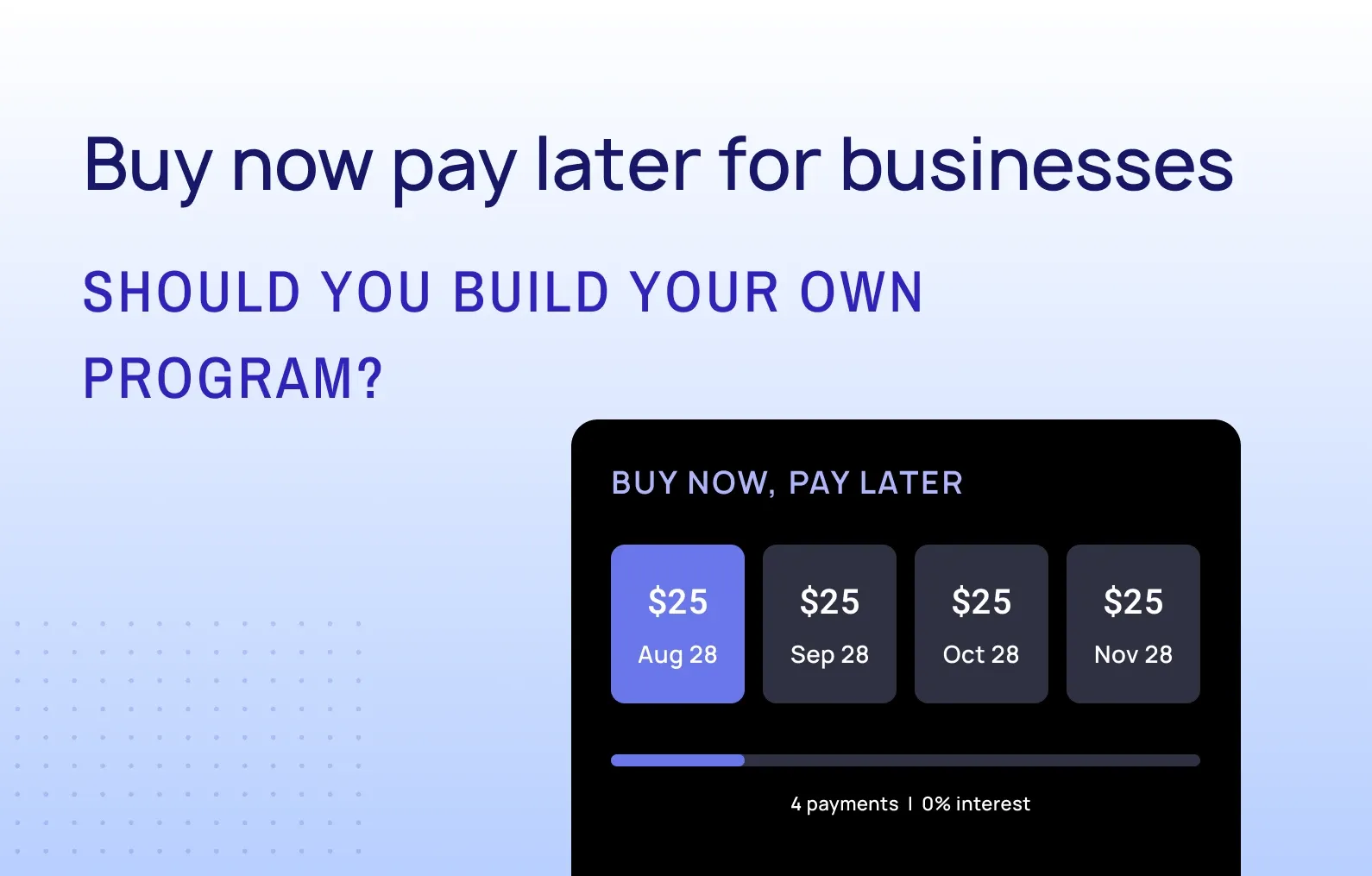
This is why POS financing is often referred to as a “10-second loan.” The lender needs to deliver near-instantaneous, automated underwriting that enables consumers to split a purchase into smaller installments at checkout.
The exact number of seconds will vary by product and purchase experience. The principle is the same: a lender needs to collect information, make a credit decision, present terms, and move the transaction forward before the customer loses momentum.
In this post, we’ll explore what makes POS financing different, where traditional lending systems fall short, how it extends beyond Buy Now, Pay Later (BNPL), and when to build or partner.
Key takeaways
- Point of sale financing puts lending decisions inside a time-sensitive purchase flow, making speed and reliability critical to the borrower and merchant experience.
- Traditional loan origination systems can struggle when they need to support real-time decisioning, merchant-facing workflows, and an immediate handoff into servicing.
- Point of sale financing and Buy Now, Pay Later overlap, but POS lending can support larger purchases and longer-term installment products.
- The right POS lending software needs to connect decisioning, merchant experiences, loan servicing, payments, and compliance without creating operational gaps.
- Lenders can build a POS financing program themselves or partner with an infrastructure provider, depending on how much of the technology stack they want to own.
Why generic loan origination systems break at checkout
At checkout, the lending decision is no longer happening on the lender's timeline. The customer is ready to buy, the merchant is ready to complete the sale, and financing has to keep pace with both.
The POS lending system has to make a decision quickly, work inside the merchant's sales process, and transition the resulting loan into the lender's existing operations without introducing friction along the way.
Decisioning has to happen in the transaction
In a traditional lending workflow, application, verification, underwriting, approval, documentation, and funding can happen as a series of steps. At checkout, those steps have to work as part of the transaction itself.
The system needs to receive application data from the merchant or checkout experience, retrieve or evaluate the information needed for underwriting, apply the lender's rules, and return a decision and financing options while the customer is still completing the purchase.
That puts different demands on the decisioning layer. It needs to be accessible programmatically, respond quickly, and support the data, rules, and product configurations the lender needs without forcing the customer into a separate application experience.
Automating a traditional lending workflow is not the same as designing one for checkout. The decisioning process itself has to be capable of operating within a transaction where there is little tolerance for delay, interruption, or manual intervention.
The merchant becomes part of the lending workflow
Traditional lending systems are built around a relationship between the borrower and the lender. POS financing adds another party that needs to interact with the lending infrastructure: the merchant.
The merchant is effectively the entry point to the POS loan. It may need to initiate an application, submit purchase and customer information, retrieve financing options, receive the decision, and complete the transaction once financing is approved. Every one of those interactions has to fit the merchant's existing sales process.
An API that simply sends an application into an LOS is not enough if the merchant still has to jump between systems to manage the transaction. POS lending may require financing to be embedded directly into an e-commerce checkout, integrated with a point-of-sale system, or managed through a merchant portal.
The merchant experience is part of the lending experience, so those interactions need to feel like one continuous process.
The purchase ends, but the lending relationship doesn't
The checkout experience has a clear finish line: the customer completes the purchase. A POS loan is different. Once financing is accepted, the loan needs to be booked with the correct terms, the repayment schedule needs to be established, payments need to be processed, and the borrower needs access to the account and ongoing communications.
That creates a specific challenge for POS lending: the loan originates in a transaction owned by the merchant, but the account becomes part of the lender's servicing operation.
A generic LOS may be able to create the loan, but if the lender has to move the loan into a separate servicing system, reconcile data between platforms, or build custom workflows for every POS product, the complexity that was removed from checkout simply reappears in the back office.
For POS lending, origination and servicing need to be designed as connected stages of the same workflow. The system that captures the financing decision should be able to pass the resulting loan directly into the account lifecycle, with the terms, borrower information, and transaction details intact.
Point of sale financing vs. Buy Now, Pay Later: What's the difference?
Point of sale financing and Buy Now, Pay Later (BNPL) are often used interchangeably because they can look very similar to the consumer: financing is presented during a purchase, the consumer receives a decision, and the purchase is paid over time.
However, BNPL is just one type of point of sale financing. POS financing can include short-term BNPL products, longer-term installment loans, and other financing products designed around a specific purchase.
Beyond BNPL: bigger-ticket, longer-term point of sale financing
BNPL typically focuses on splitting a purchase into a small number of payments over a relatively short period. But not every purchase belongs in a four-payment BNPL product. Point of sale financing can extend well beyond that model, particularly when the purchase is large enough to require a longer repayment period or a more traditional installment structure.
Let’s take a look at some examples:
- Healthcare financing: Patients may need financing for elective procedures, dental work, fertility treatment, vision care, or other medical expenses that can cost thousands of dollars. Longer-term installment healthcare financing can give providers another way to offer payment options at the point of care.
- Home improvement: A new HVAC system, roof, windows, kitchen renovation, or solar installation can turn into a significant expense. Point of sale financing can give homeowners the option to spread payments over a period that better matches the size of the project.
- Equipment: Businesses purchasing equipment may need financing for larger purchases such as machinery, technology, medical equipment, or other capital assets. Financing at the point of purchase can connect the lending decision directly to the equipment sale.
- High-ticket retail: Furniture, appliances, electronics, jewelry, and other major purchases can exceed the size or repayment structure of a typical BNPL transaction. Longer-term financing can give merchants another way to help customers complete those purchases.
- Automotive and powersports: Vehicles, motorcycles, boats, recreational vehicles, and other high-value purchases require financing structures that are fundamentally different. Embedding financing into the purchase experience can bring the lending decision closer to the transaction.
The common thread is that the POS financing needs to match the purchase. As the ticket size, repayment period, and complexity of the loan increase, lenders need POS lending software that can accommodate different products and lending models.
What to look for in point of sale lending software
POS lending software is not simply BNPL software with a different label. When evaluating point of sale finance providers, lenders should look at how well they can support the entire lifecycle of a point of sale loan.
Decisioning speed
The platform should support fast application processing and automated decisioning without sacrificing the underwriting logic the lender needs.
Why this matters: At checkout, a slow or interrupted decision can break the purchase flow, giving the customer a reason to abandon the transaction or the merchant a reason to lose the sale.
What to ask: How applications are submitted, what data is available at decision time, how rules are configured, how quickly decisions are returned, and what happens when an application needs additional information or review.
Merchant portal and integration capabilities
The platform should make financing easy for merchants to initiate and manage within the sales process they already use.
Why this matters: POS financing has to fit into the merchant’s sales process, or financing can become a source of friction instead of helping complete the sale.
What to ask: How merchants submit applications, retrieve financing options, track decisions, and complete approved transactions, and whether those capabilities can be embedded into existing point-of-sale or e-commerce workflows.
Servicing continuity
The platform should move an approved loan into servicing without creating a separate operational workflow for the lender.
Why this matters: A fast approval does little for the lender if moving that loan into servicing creates manual work, duplicate systems, or gaps in the borrower experience.
What to ask: How loan terms, borrower information, and transaction data move into account setup, payments, communications, and ongoing servicing, and whether those handoffs happen automatically or require separate systems and manual reconciliation.
Product flexibility
The platform should support different financing products without forcing the lender to build a new technology stack for each one.
Why this matters: A lender may launch with one POS product and expand into new purchase types, customer segments, or repayment structures over time.
What to ask: How easily lenders can configure loan amounts, terms, repayment schedules, underwriting rules, and eligibility requirements, and whether the same infrastructure can support both short-term and longer-term installment products.
Compliance infrastructure
The platform should build compliance requirements into the lending workflow rather than leaving the lender to manage them separately.
Why this matters: POS lending can introduce compliance requirements into a fast-moving transaction, making it important that required controls don't depend on manual intervention or disconnected systems.
What to ask: How the system handles required disclosures, lending rules, decision records, and audit trails, and how those controls carry through from application and underwriting into servicing.
Build vs. partner: How to launch a point of sale financing program
Launching a point of sale financing program requires lenders to decide what they already have, what they need to add, and how much they want to build and maintain themselves.
This build vs. buy decision often comes down to control, resources, and priorities. Building internally gives lenders control over the technology, product configuration, merchant integrations, and borrower experience. It also means owning the development, maintenance, and ongoing evolution of that infrastructure as the program grows.
On the other hand, partnering with a lending infrastructure provider like LoanPro can give lenders configurable capabilities without requiring them to build the entire stack themselves. That can let internal teams focus on the parts of the program they want to own and differentiate, while the underlying lending infrastructure is handled by a technology partner.
Building the infrastructure behind the 10-second loan
A 10-second loan is a simple way to describe what the customer wants in a POS financing experience. But, as we’ve explored, what happens behind those 10 seconds is considerably more complicated.
That’s the challenge of POS financing: making a complicated lending process feel simple at the exact moment a customer is ready to buy. For lenders, the opportunity is to handle that complexity in the infrastructure so the customer never has to experience it.
Ready to launch a point of sale lending program? Explore LoanPro's lending platform to see how you can manage the POS lending experience from application through repayment.
Have questions? Checkout our FAQ:
How fast should a point of sale financing decision be?
Fast enough to keep the purchase moving. The exact target depends on the merchant experience and financing product, but point of sale lending generally requires near-real-time application processing and decisioning. A lender should evaluate the complete workflow, including data retrieval, underwriting, offer generation, and the return of the decision to the merchant.
Does point of sale financing require a banking partner?
Not necessarily. The structure depends on who is originating and funding the loans, the lender's regulatory position, and the program's specific requirements. Some businesses originate and fund loans directly, while others work with banks or other lending partners.
Can one platform handle both BNPL and larger installment loans?
Yes, it can if the platform supports configurable products, underwriting rules, repayment schedules, and servicing workflows. This is an important evaluation point for lenders that expect their POS financing strategy to expand beyond short-term BNPL.
What is an alternative to point of sale lending?
Depending on the purchase and customer, alternatives can include credit cards, personal loans, merchant-funded discounts, cash or debit payments, or other forms of consumer financing. The right option depends on the size and type of purchase, the customer's credit profile, and how the merchant wants financing to fit into the buying experience.
Is point of sale financing the same as BNPL?
No. BNPL is a form of point of sale financing, but POS financing is a broader category. It can include short-term BNPL products as well as longer-term installment loans and other financing products offered during a purchase.